
Custom machine RFQ: what should be specified?
The cost and risk of a purpose-built machine depend strongly on how clearly the production requirement is defined. Instead of asking for “an automated machine”, prepare a concise process description and measurable acceptance criteria. This makes engineering proposals more comparable.
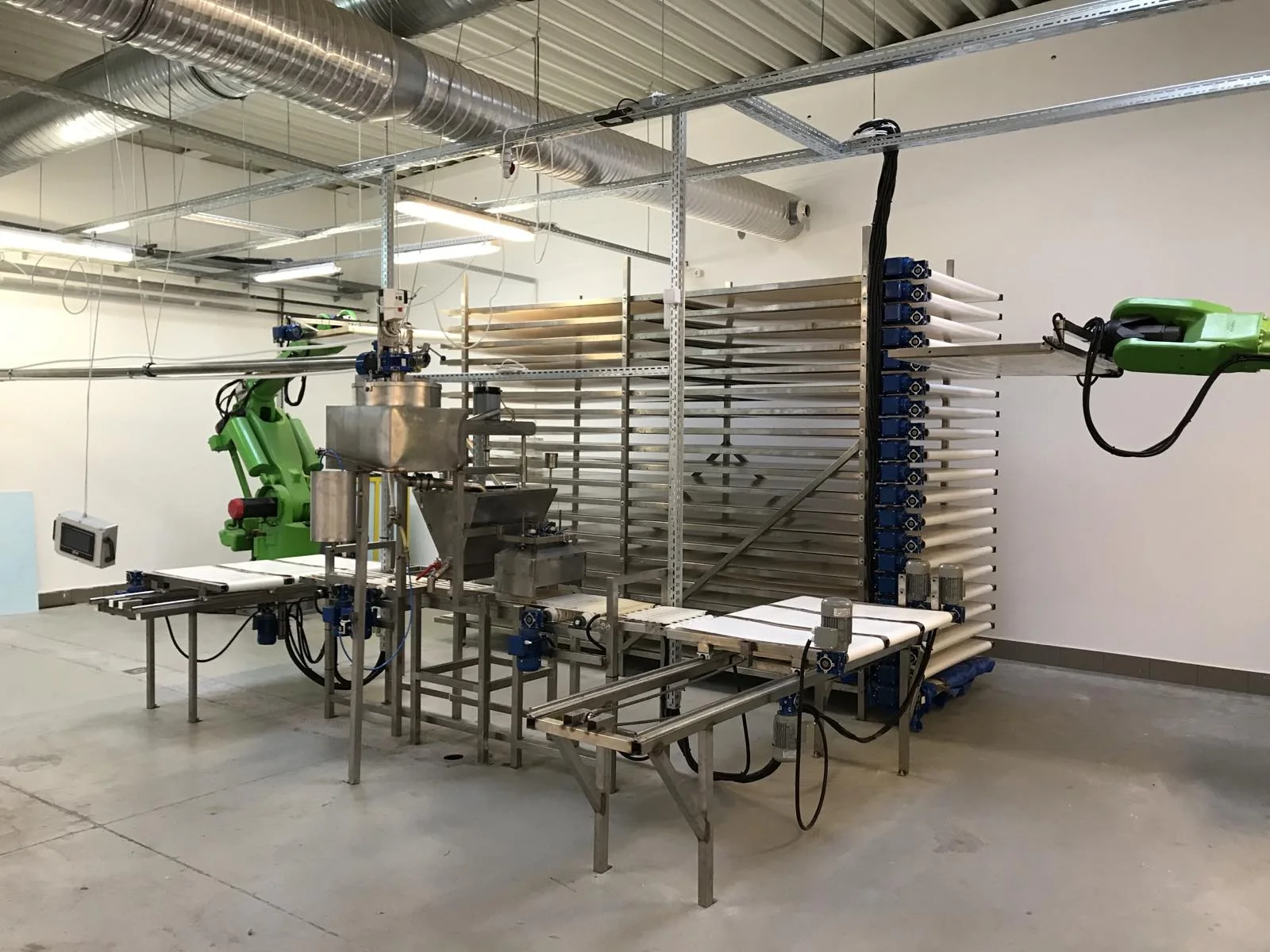
Define the operation, not just the machine
The equipment must perform a specific sequence for defined products. Cutting, dosing, positioning, assembly and inspection require different mechanics and controls.
Points to verify
- Product drawings, sizes and material variants
- Current manual or machine sequence
- Input/output condition and quality limits
- Operator interventions and reject handling
Describe cycle time and product variation
Parts per hour alone are insufficient. Changeover, product mix, feeding and discharge may determine the practical capacity.
Points to verify
- Target cycle time and shift volume
- Product changeovers and recipe handling
- Accuracy, repeatability and tolerances
- Allowable manual and automatic downtime
Match the existing production environment
The available footprint, utilities, handling routes and maintenance access affect the concept from day one.
Points to verify
- Footprint and maintenance clearances
- Power, pneumatics, extraction and other utilities
- Mechanical handover to upstream/downstream equipment
- Industrial network or ERP/MES interfaces
Consider operators and maintenance teams
Specify modes of operation, diagnostics, permissions and initial safety expectations. Risk assessment and conformity responsibilities must be agreed within the project.
Points to verify
- Automatic, manual, setup and service modes
- HMI language, alarms, recipes and access
- Protective guarding and safety principles
- Documentation and role allocation
Define what a successful handover looks like
Acceptance is not merely switching on the equipment. It should use agreed samples, performance checks and deliverables.
Points to verify
- Sample products and quality criteria
- Cycle-time and acceptance test method
- Backups, drawings and spare-parts information
- Operator training, warranty and support scope
General engineering guidance only; it does not replace site surveys, risk assessments or applicable conformity procedures.