
Factory automation starts with machine-to-machine cooperation.
A production line only works reliably when machines can exchange not just ready signals but status, faults and product handovers. This guide covers essential preparation from process mapping to site acceptance.
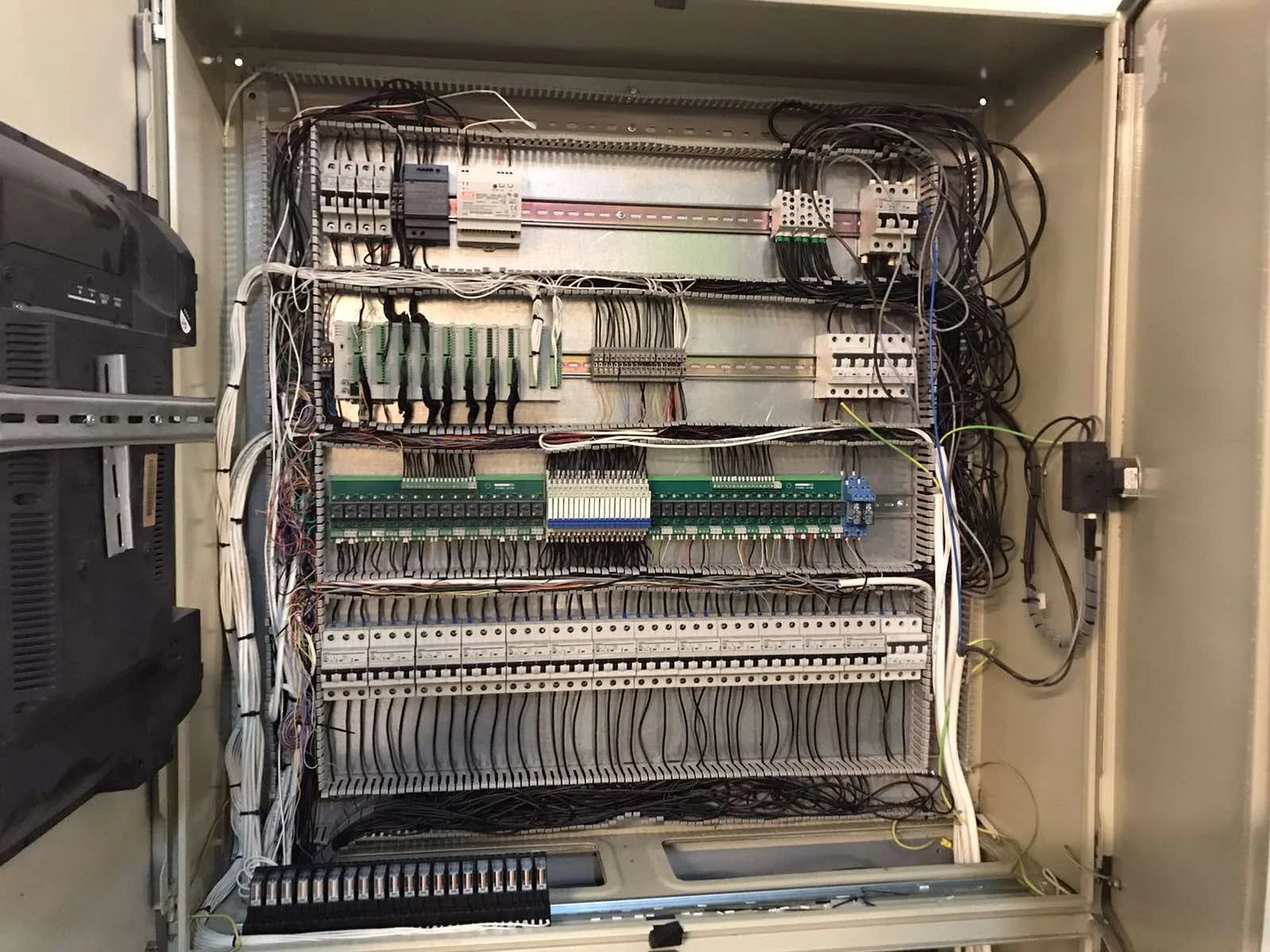
Start with the real material flow
The controller brand is rarely the first decision. Record inputs, process steps, handover points, operator actions, bottlenecks and rejects.
Points to verify
- Draw material flow and operation sequences
- Measure cycle time and bottlenecks
- Record manual interventions and changeovers
- Identify fault and restart scenarios
Define machine-to-machine interfaces
A single ready bit is not a complete interface. Specify who owns a transfer, acknowledgements, timeouts and behavior on interruptions.
Points to verify
- Ready, busy, fault and enable states
- Transfer acknowledgement and timeout rules
- Interface ownership and signal test method
- Recovery after power interruption
Make operating states understandable
Control logic, operator interface and production-data exchange serve different purposes. Consistent names for alarms and states improve maintenance.
Points to verify
- Operating modes and user permissions
- Common alarm and status terminology
- Recipes and product changeovers
- Required event logging and process data
Design both safe stopping and restart
Responsible specialists must define safety requirements. Production stops, fault stops and restart sequences should not be treated as the same event.
Points to verify
- Emergency stop and protective functions
- Controlled stop and recovery states
- Manual clear-out and maintenance modes
- Behavior after power or network failure
Test normal and abnormal operation
Acceptance should cover changeovers, jams, faults and recovery, not only normal throughput. Define FAT/SAT depth according to the scope.
Points to verify
- Function, signal and interface tests
- Agreed throughput and quality criteria
- Fault and restart exercises
- Documentation and operator handover
General engineering guidance only; it does not replace site surveys, risk assessments or applicable conformity procedures.