
Before replacing a PLC: what should you check?
An aging machine does not always need a complete control replacement. To choose between fault repair and retrofit, assess the actual failure mechanism, available software and wiring records, safety functions, and production downtime together. This checklist supports early engineering discussions.
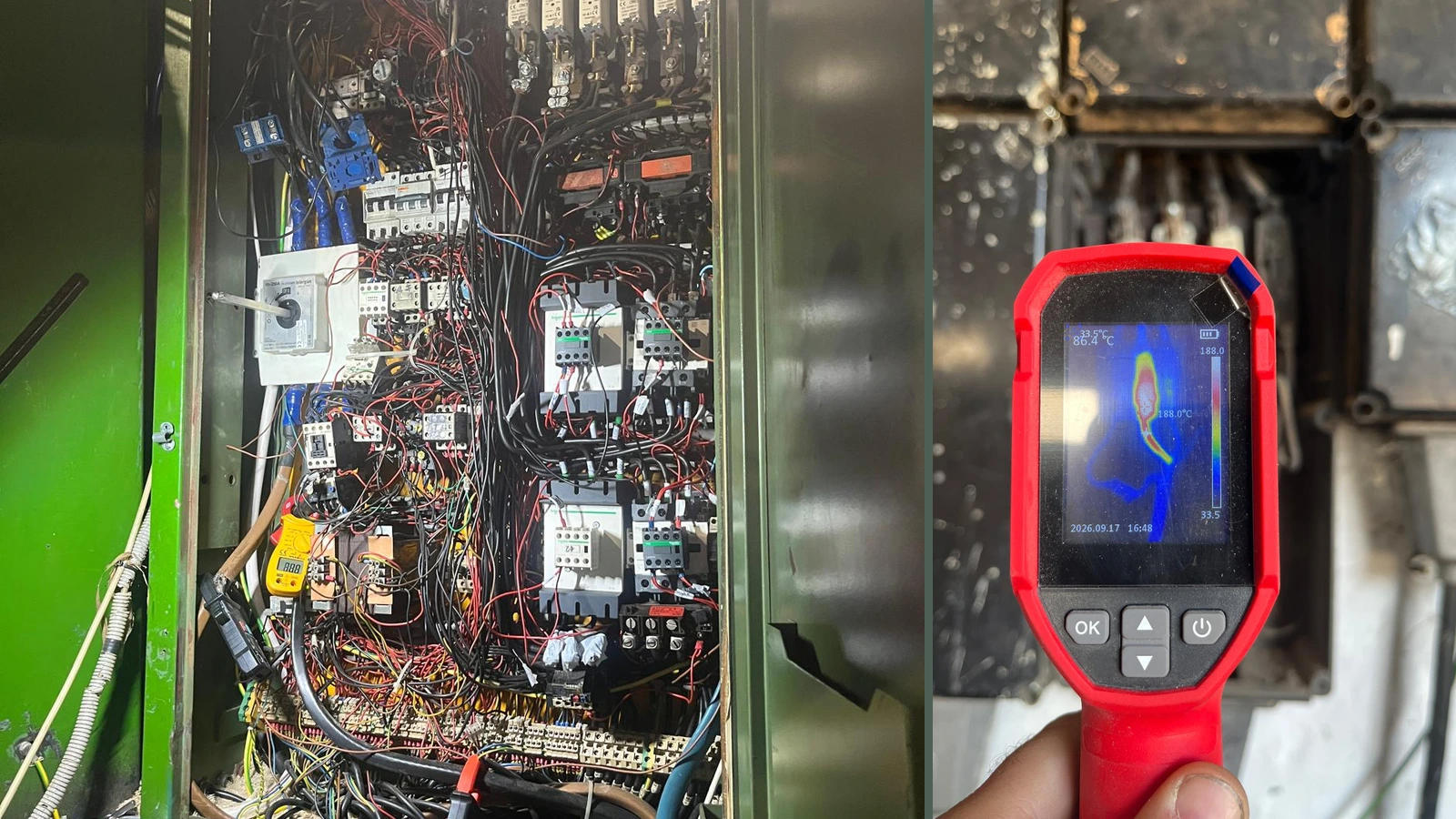
Separate the failure from the age of the controller
Intermittent machine stops may be caused by power supplies, sensors, cabling, drives, fieldbus faults or software logic. The first task is to document the conditions in which the fault can be reproduced.
Points to verify
- Record failure frequency and operating conditions
- Inspect power and cabinet condition
- Check sensors, drives and communication networks
- Compare original and current operating sequences
Inventory programs, access and wiring documentation
The decisive question may not be the PLC brand but whether programs can be backed up, access is available, and an I/O map exists. Documentation gaps increase downtime risk.
Points to verify
- PLC and HMI projects, passwords and versions
- Electrical drawings, terminals and I/O list
- Drive, servo and network parameters
- Verified backup and restoration procedure
Review safety functions separately
Emergency stops, guards, interlocks and safe isolation are not ordinary HMI functions. The extent of modification determines which risk-assessment and conformity tasks need review by responsible specialists.
Points to verify
- Identify hazardous motions and safe states
- Document safety chains and fault responses
- Evaluate consequences of modifications
- Assign safety and documentation responsibilities
Plan the production cutover
A retrofit includes wiring, signal tests, machine sequences, operator acceptance and a fallback plan. An installation date alone is not an acceptance plan.
Points to verify
- Define functions and critical sequences
- Agree downtime window and fallback
- Prepare simulations and signal tests
- Specify site acceptance criteria
Leave a maintainable system
The final deliverable should include usable backups, parameters, electrical records and instructions for diagnostics.
Points to verify
- Final code and parameter backup
- Updated I/O maps and drawings
- Documented industrial network settings
- Commissioning and troubleshooting checklist
General engineering guidance only; it does not replace site surveys, risk assessments or applicable conformity procedures.